I still haven't covered all of my road trips from this past summer and fall, nor have I even covered all of my road trip from 2017. And so it goes. With the social distancing now in effect in the country, I have more time to deal with stuff here and not do those frivolous things like hiking and geocaching. Well, I'm still doing the former and practicing social distancing at the same time. But, on to the real subject of this particular blog.
Part of the fun of solo road trips is you can stop where ever you want to stop and explore things that might not happen if you're with other people due to a set agenda. As I was driving between Albuquerque, New Mexico and Flagstaff, Arizona on my October road trip, I spotted signs for El Malpais National Monument. I'd never been there before, so why not stop and visit?
One of the drawbacks to doing something like this however, is if you have somewhat of a set schedule, stops along the way sometimes get short circuited, because you don't have enough time to do a proper visit. This was the case with this particular stop. I basically saw some of the "greatest hits" of the monument, but really didn't get to explore it in depth. Had I had more time, I probably would have spent the night here, camping in the campground and then moved on later the next day, but I didn't have camping gear with me on this trip anyway, so the point was moot.
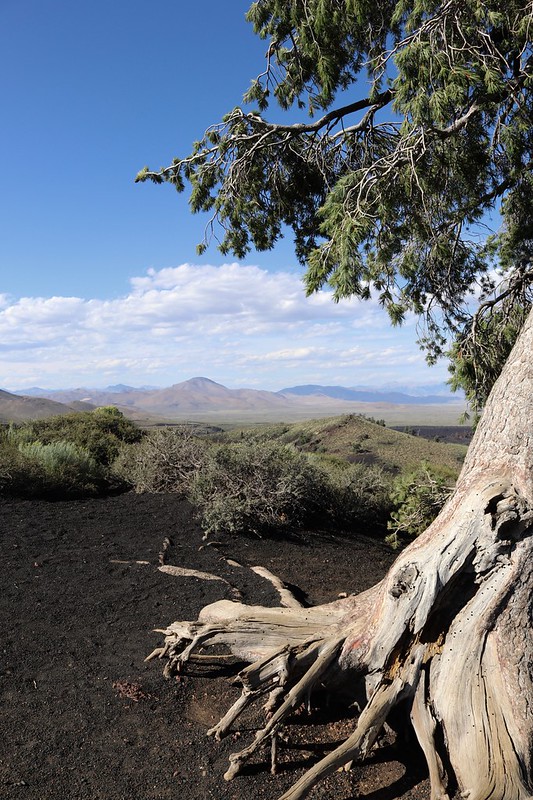
The park is rich in volcanic activity, with sandstone bluffs sticking out above several different lava floes in the park. There were several earth caches that I worked on during my brief stay in the park, so I learned that there were at least 7 different periods of volcanic activity across the plains as I looked out from the top of the sandstone bluffs. Much like my time at Craters of the Moon National Monument in Idaho this past summer, I could actually see the different floes, because each had a different characteristic and age to it based upon the amount of vegetation that was growing within the floe.
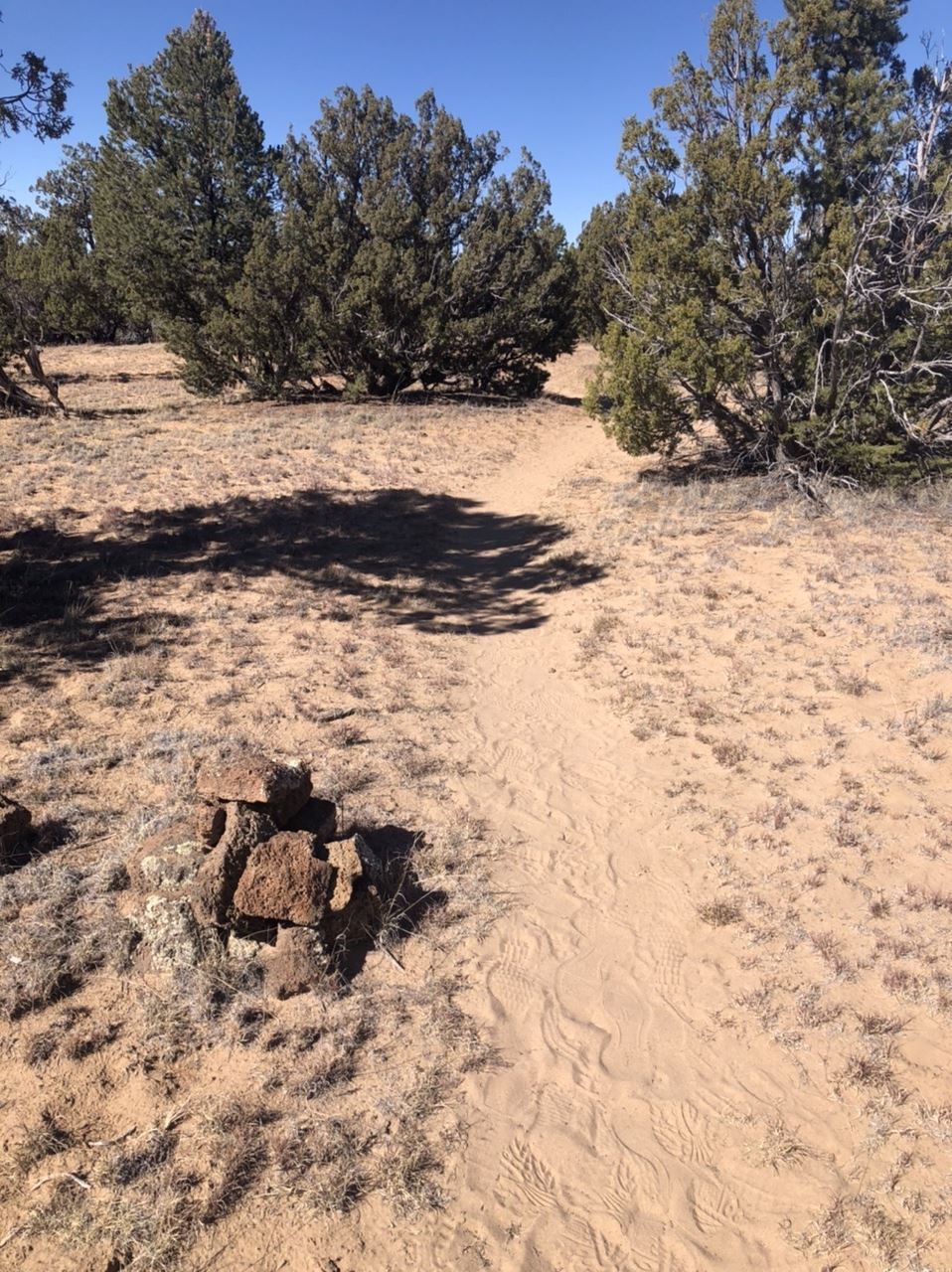
I did a couple of short hikes to viewpoints, at one point hiking along the Continental Divide Trail (CDT), one of the big three trails in the United States that run north to south. The CDT runs from the Mexican border in New Mexico all the way into Glacier National Park in Montana. Because it's a relatively new trail, unlike the Appalachian Trail (AT) or the Pacific Crest Trail (PCT), the route is not as clearly defined. In fact, right here in the monument, there were two possible routes you could choose if you were hiking through the park along the CDT, one which went inland seen in the first photo, or the other which went along the road and was a little bit shorter. Either would count if you were hiking the trail, but if I were backpacking the trail, I think I'd opt for the part that went through the monument as opposed to along the road. In my opinion, road hiking is not that exciting.
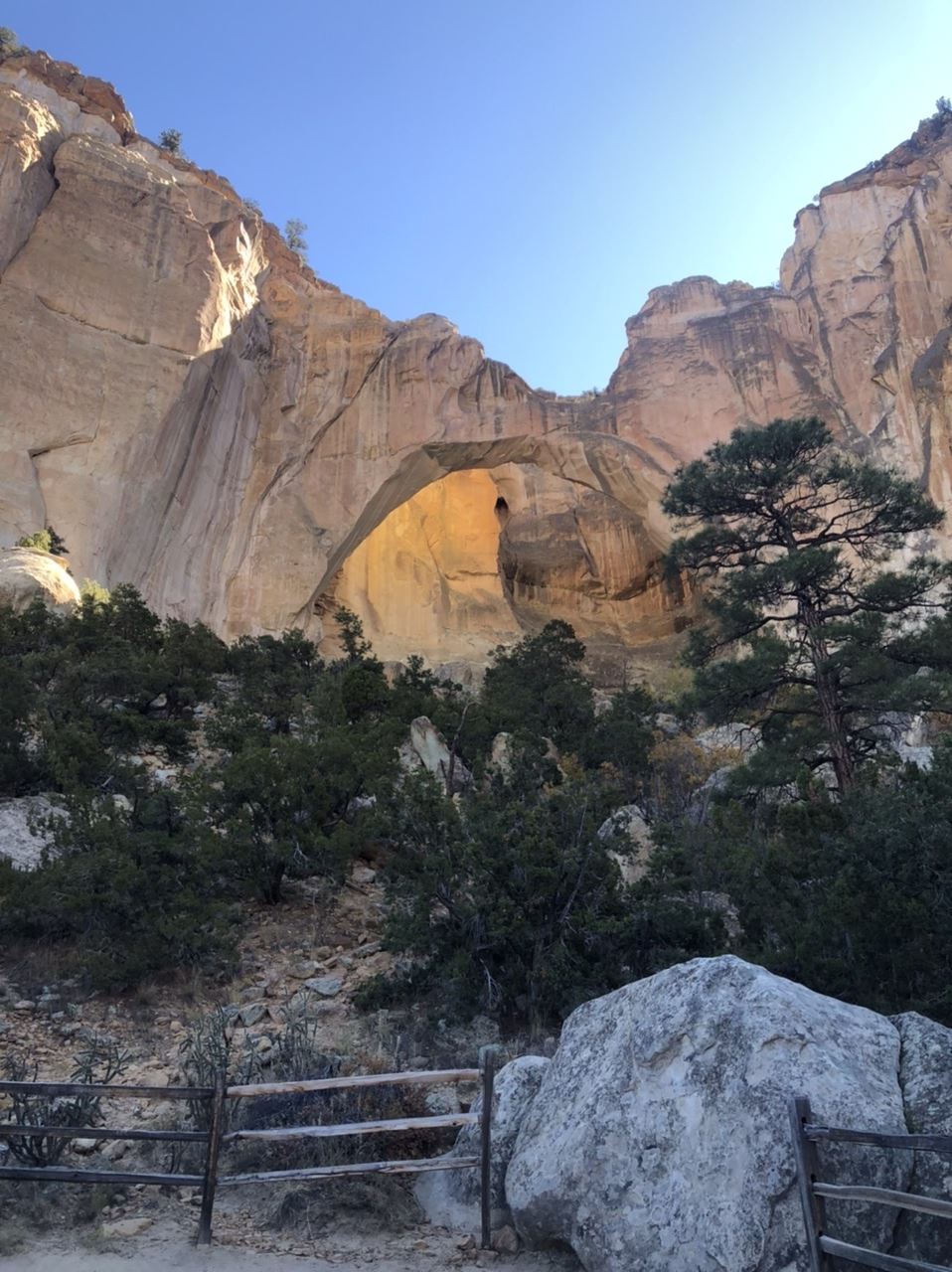
The last thing in the park I explored that day was the La Ventana Arch in the southern part of the park. La Ventana is a natural arch formed due to wind erosion. Looking at the photos I took, it's a little bit difficult to see the arch, unless you see the sunshine on the back part of the sandstone bluff behind the arch. I was there in the morning hours and the sun was not in the right place. I'm sure the view would look differently, were it later in the day and the sun was shining on the arch as opposed to in your face in the morning hours when I was there. Still, I got some pretty cool shots of the arch, one of which I'm using right now as my wallpaper on my desktop computer. Needless to say, I intend to visit the park again if I'm driving along I-40 in New Mexico. At least this time, I'll know what I'm getting into and save some extra time to explore some areas more in depth.
Many people I know who really enjoy our country's national parks, tend to forget about the smaller national monuments. That means the crowds are smaller and there's more space to enjoy the quiet solitude of a particular spot. This is definitely the case here at El Malpais. I'll be back sometime in the future.
The day following my exploration of Carlsbad Caverns and Guadalupe Mountains National Parks, I headed towards Albuquerque, New Mexico. Originally, I was going to head west toward White Sands National Monument. But when I checked the White Sands website, I saw this alert; occasionally the road into the monument can close due to missile testing. Look here for the latest information. So I checked and sure enough, the day I'm supposed to be heading to White Sands, there's going to be missile testing. The website when further to say they could give a range as to when the road would be closed, but there was no guarantee that it wouldn't last longer.
So I now have a slight dilemma on my hands. Do I risk it and take a three hour drive on a mountainous road only to be told that the road into the park is closed? I decided that I really didn't want to rush the extra driving, so I took a different route heading northwest directly to Albuquerque. Because I got to Albuquerque earlier than anticipated, I decided to visit Petroglyph National Monument which was just a couple of miles north of my motel. I'd never heard of this particular monument before, but as long as I was there, I decided I was going to explore parts of it.
 My first stop was the visitors center off of Unser Boulevard just north of Interstate 40. As a teenager, I spent many springs and summers in Albuquerque visiting my cousins who lived there, but I wasn't aware of this park at that time. This was mainly because it was established as a state park in the 70s and was authorized as a national monument by an act of Congress in 1990. I got a map and decided that I was going to explore the Boca Negra Canyon area, mainly because it looked like that was a place where the petroglyphs were easily accessible and plentiful.
I got there at a perfect time, since most people who had been there were departing, so I had the area pretty much to myself and was able to enjoy looking at the different petroglyphs as I climbed up on the trail through the volcanic boulders that were piled up on this hillside/escarpment. After exploring that first trail, I then wandered over to the Macaw Trail, so named because of the prominent bird petroglyph right at the start of that trail. I walked that trail and figured I spent about two hours in the park before deciding to head back to my motel room for the night.
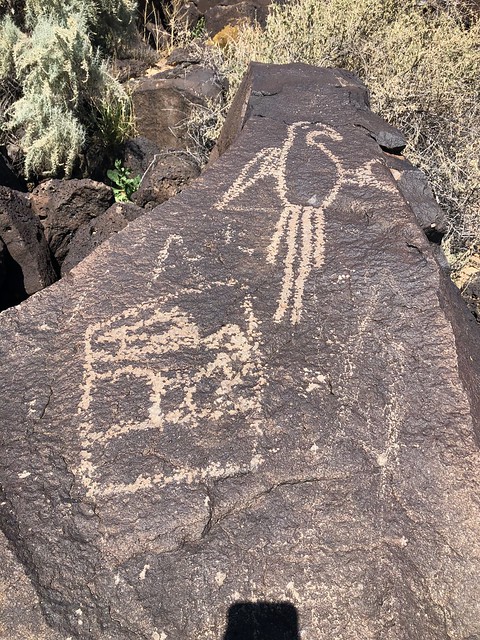
As I walked along the trails, I couldn't help but think about what might have been going through the Native American's minds as he or she scraped off the desert varnish on the rocks to create this piece of artwork. Were they trying to convey how beautiful that particular bird was, or were they merely creating an image of their food, much like what many people do today with their Instagram accounts? Also, what was going through the minds of some of the people from the present day who felt it necessary to scrape and scratch out things on the rock? As you can clearly see in the second photo, there are extra scratches that were mostly likely done by a present day visitor. Since Christianity wasn't in the area 700 to 2000 years ago when these petroglyphs were created, I know that the modern day cross I observed on one of the rocks was definitely not supposed to be there. This graffiti is pure and simple, vandalism.
And because the National Park Service is underfunded, it's not surprising that these national treasures get defaced and sometimes even stolen away. When I visited Craters of the Moon National Monument in August, there was clear evidence in several areas where lava flows had been broken off and taken home with people. It's almost like we have to lock up everything behind bullet proof cases in order to protect the treasures out there from idiots who feel that it's for them and who cares about anyone else. I was taught to look, don't touch unless it's OK to touch. I respected that rule growing up and I respect it today. Sometimes I don't get the attitude of some people. And yes, I can hear the grumpy old man in me right now yelling, "GET OFF MY LAWN!"
So I'll get off of my soapbox right now and tell you that I thoroughly enjoyed this extra highlight to my trip, one that I wouldn't have had time to see if my plans hadn't been altered in the first place. Life gave me a different thing to enjoy that day.
There are a variety of things that I enjoy about road trips. Visiting places again to rekindle the enjoyment that I had the first time around is one of them, but I think visiting new areas and exploring things I haven't seen before is even more exciting. That's one of the reasons why I decided to visit Craters of the Moon National Monument on my first road trip this summer.
The park, which is located in Idaho, has been on my radar (bucket list) for quite some time. My time in Idaho, previously, had been limited and I'd never gotten this close to the monument before, although I suppose you could argue that my youngest and I could have stopped there while heading up to Yellowstone National Park, but I guess the lure of the geysers was stronger than the lure of the lava fields. This trip, Craters of the Moon was going to be one of the central pieces of the trip, one where I'd spend a longer period of time to really explore the park.
I got there early in the afternoon, since I only had to drive from Pocatello, Idaho. While on the drive, I stopped here and there to find some geocaches, but I wanted to get to the park early in order to secure a good camping spot. First come, first serve sites area always unpredictable. Many times previously, when I'd visited Cedar Breaks National Monument, I had my pick of the campground, but this trip when I stopped there, the campground was almost full. Needless to say, I wanted to make sure I had a campsite.
The campground is one of the coolest campgrounds I've ever encountered in a national park or monument. I believe the park service just literally bulldozed spots out in the middle of this huge lava field. Many were very secluded, with high rock walls all around, which was very important, as those rock walls cut the wind that whipped through the campground and park during the day.
I got a pretty nice campground and then went around and explored what I could that afternoon. I drove outside of the visitors center area over to an overlook that gave me an incredible view of the lava fields that formed the park. From this vantage point, it was very easy to see the different fields and to tell which were older, based upon the size and amount of the vegetation. The older fields had Limber Pines growing, while younger fields had small sage and plants, or perhaps very little at all.
I then came back into the main area of the park and drove the loop drive, stopping at pullouts here and there to work on several earth and virtual caches that were present in the park. The virtual cache took up the most time because it wanted me to get information from different points around the park, so I decided to concentrate on that. Even so, as I worked on one part of that cache, I ended completing another earth cache which was located at the top of a huge cinder cone in the middle of this particular area.
The views from the top of that cinder cone were amazing as you can see from the second photo. I actually went back and forth with myself whether I wanted that second photo to be in color or black & white, but as you can see the color side won out. Whenever I take landscape shots, I always look at them as to whether they'll look good in black & white, mainly because I'm a big fan of Ansel Adams' photography.
Finally, after a good afternoon of exploring, I went back to camp, ate dinner and walked around the campground marveling at all the stars I could see in the night sky. Many of the parks in this area of the country have been designated "Dark Skies" parks, because of their remoteness to city lights. Few of us ever see many of the stars in the night sky anymore due to light pollution, so it's always nice to get out in an area where you can see the Milky Way galaxy at night. Unfortunately, I couldn't see the Milky Way for very long, since I happened to be there during the full moon cycle for the month and the moon, once it rose, pretty much washed out much of the sky.

The next day was spent exploring the far reaches of the loop drive and areas I hadn't been able to get to the previous day. I went on several hikes, including the tree molds trail, where I got some nice landscape shots and was able to see some tree molds created by the lava flowing around trees and preserving their outlines. I also got to see where the lava fields stopped flowing near some splatter cones. One splatter cone was called Snow Cone, because it had a large snow dome down inside of it.
That evening, I was treated to a spectacular sunset. After dinner, I decided to head out to one of the parking lots on the loop drive so I would have a large expanse of area in which to move around and take some photos. The evening sky did not disappoint. I have several others, but I think this one, is by far and away the best of the bunch that I took that evening.
Craters of the Moon is one of those parks that if you're going to see it, you really want to go see it, mainly because it's far off the beaten path. It's uncrowded and if you get there early on a trail, or stay late, you pretty much have the place to yourself. I got on the Tree Molds Trail around 8 in the morning, hiked the two miles or so all the way out to the end of the trail and encountered one other person the entire time I was on the trail. Another trail that I walked after dinner and before sunset had no one on it and it was like I had the entire park to myself. It made it very easy to get lost in the beauty of the earth and forget about the crowds. This is someplace I'd visit again.