This is a continuation of my trip to Colorado and Utah from last October. This particular day was mostly a travel day, getting myself from Grand Junction, Colorado, over to Salt Lake City, Utah where I would spend several days. When I worked out the itinerary of this trip, I realized that I was close enough to Dinosaur National Monument that it wouldn't make sense not to stop and at least whet my appetite on the fossils there, and so this particular spot also made the list of must sees. And as always, I usually bite off more than I can chew when I'm on trips like this, but it just gives me an excuse to come back at a later time.
This is a way to chronicle my thoughts, my photography, and more importantly, my wanderings. Remember, all who wander, are not lost.
Sunday, March 3, 2024
Dinosaur Stew
Monday, February 26, 2024
When is Graffiti not Graffiti?
Saturday, January 20, 2024
Black Canyon of the Gunnison
It's been awhile since I've written in here, but as I look back over the calendar of blog entries, I missed a couple of other months last year too, so now I don't feel so bad. This is a continuation of the series that I started back in October for my road trip I took in the middle of October to Colorado and Utah.
Back in October, I wrote about my first full day in Colorado and my visit to Colorado National Monument. I had hosted a geocaching coffee event that morning, then toured the monument for most of the day afterwards. The next day, I drove southward out of Grand Junction heading for Black Canyon of the Gunnison National Park. I'd been to the park previously, before it had been upgraded to national park status, but the time gap between visits of over 50 years made me want to go back and see it again, as all I could recall of the park was that it was very vertical.
On thing that I noticed as I got to the park was that it was surprisingly busy for it being the middle of October. I figured that I'd have the park mostly to myself, with maybe some other senior citizens traveling around the country visiting sites in the "off season" but that was not the case, at least the day I was there. There were plenty of families and many of the viewpoint areas were filled to capacity with cars.
As a kid, you don't remember things like parking problems, but I couldn't help but wonder what this would be like in the middle of summer during the height of the tourist season. And of course, my mind went back to that summer day over 50 years ago when my dad hopped us all in the station wagon for the trip north from our base camp in what I believe was Durango to visit this seldom visited national monument. Perhaps, the upgrade to national park status has boosted tourism to the place, but I still couldn't help but think that the minuscule parking lots during the summer would not be a positive experience for the average person visiting the park.
Because it was October, the park was beginning to experience multiple signs of fall with many of the park's deciduous trees and bushes showing off their fall colors. I saw photos from a national park group on Facebook that I frequent where someone posted similar photos, but had been there about 10 days later and they were even more spectacular in color than the one I've posted here. Being from Southern California, almost any color is amazing, so I guess you could say I was impressed with what I saw that day.
As I noted above, the park is very vertical. The Gunnison River carved through the volcanic rock and carved it very deep, but not very wide. At points in the park, the canyon is only about there quarters of a mile wide, but almost a half mile deep. Contrast that with the Grand Canyon in Arizona which might be a mile deep but 10 miles wide and you can see where this little canyon can be quite impressive.
As always, part of my reason for being there was to learn some geology and what better way to do that than through some of the earth caches that had been placed in the park. I did many of the tasks that were required by the different earth caches and walked several trails to get closer to the edge of the canyon. As I drove out to Painted Wall, the crowds thinned tremendously. I was actually surprised at this since I felt that the Painted Wall section was the most spectacular in the park, but it also meant that the trails were less populated and so there was time for some solitude, so I wasn't complaining.
It was also in this section where you could really see where the canyon got it name. The walls of the canyon are composed mostly of gneiss, but had bands of intruded light colored pegmatite running through them. This area is also the deepest part of the canyon. Imagine being in Paris. You could stack two Eiffel Towers on top of each other and they still wouldn't reach the top of the canyon from the river below.
I know the nostalgia of wanting to come back and retrace my childhood steps might seem silly to some, but I was glad I came. I can remember being not very impressed with my dad's photos of the park at the time and I know why now. With little to no clouds directly overhead, the sun made for very harsh lighting conditions. Lots of deep shadows so you really couldn't see a lot of detail in some of the photos and my own photos are very similar in appearance.
I enjoyed my time in the park and if I'm ever in the area again, I'll make sure I spend some more time on the opposite rim for a different perspective. There just wasn't enough time to squeeze both rims in on the same day with all the driving that entailed. After spending several hours in the park and enjoying a light lunch there, I headed back to Grand Junction, geocaching all the way back to my motel.
Tuesday, October 24, 2023
My First Full Day in Colorado
This is a continuation of my post from last week chronicling my road trip to Colorado and Utah. I pretty much took enough photos for each day, so from here on out, each day will be a different blog post to cover the entire road trip.
Usually, when I road trip and the day is primarily going to be sightseeing, it will still encompass some kind of geocaching, either earth caches or virtual caches and this was no exception. That third day, I woke up and headed off to a meet and greet coffee event that I was hosting in Grand Junction. I'd met two people the day before who were planning on attending but I wasn't sure what my turnout would be for a mid-week (Wednesday) meet and greet at 8:00 in the morning. I was pleasantly surprised when 11 people showed up for my coffee event.
There were actually a couple of reasons why I decided to host an event mid-week. One, I enjoy meeting other geocaching people, putting names to faces of some of the caches that I'm probably going to find later during that trip. Two was a purely selfish reason. I wanted an extra cache type in Mesa County, Colorado to help me with that challenge I was working on for 6 different cache types in 20 different counties. We all had a good time at the event and then we said our goodbyes and I headed out to Colorado National Monument.
I've known about Colorado National Monument for as long as I can remember. My parents took us to Black Canyon of the Gunnison National Monument back in the early 70s, so I'm at a loss as to why they didn't drive the extra hour north to visit Colorado National Monument. Needless to say, it's been on my list of places to visit ever since and it didn't disappoint. As I approached the entry point to the park, the ranger told me that there might not be a whole lot of parking at any of the pullouts or parking lots as there was a naturalization ceremony going on at the park's amphitheater. Glad I was told ahead of time, so I made do with what I could that day, but it wasn't much of a problem. Rangers were overlooking some sketchy parking that was happening on the sides of the main road, which was understandable given the circumstances.As I drove up the road, I pulled out several times to enjoy the view and work on a couple of earth caches. Balanced Rock, in the second photo, was one of the formations I was able to see from below. Most of the park, you're looking downwards into the valley below, but I was still working my way to the mesa above. The wind and water erosion that created this formation and others in the park will eventually destroy them as well, but that's the geologic cycle at work.
As I continued up, I saw birds circling in the distance to the east towards Grand Junction and the town of Fruita. I came around and found another viewpoint and stopped there. There was a man viewing the birds with binoculars and I asked him if he knew what they were and he stated Golden Eagles. About five minutes later, we both spotted a Bald Eagle soaring along the ridge line. I think that's the first time I've ever seen Golden Eagles anywhere outside of a zoo and only the second time I've seen a Bald Eagle. Later in the day, I saw another Golden Eagle as it flew over my head at another viewpoint. I inquired at the visitors center later on and learned that Golden Eagles nest in the park, but Bald Eagles are rare sightings as they live and nest down in the valley near the Colorado River. I thought I was rather fortunate to experience both within five minutes of each other.
While continuing my drive along the road, I stopped at another viewpoint and got to see one of the main features of the park, Independence Monument. One of the early explorers of the area climbed to the top of this particular rock and planted an American Flag on the summit, some 450 feet above the valley floor. It's become a tradition for rock climbers to ascend the formation on July 4th and fly the flag each year.
I decided on one short hike to get out to another viewpoint, then after that headed to the visitors center to gather more information about the park. By that time, there were all sorts of parking spots as many of the people who had attended the naturalization ceremony in the morning had left. I spent another hour or so in the park, then left to find some geocaches outside of the park as I'd done all of the earth caches inside the park.
To the north of the park, I found a road that had a series of challenge caches on it and I traversed the length of that road finding all of the challenges. This was actually of particular interest to me as most of the challenges were about finding different types of caches in a certain number of counties. One of the challenges wanted me to find a multi cache in 25 different counties. A multi cache is a cache that usually has at least two different spots you have to visit in order to find the cache. Before the trip, I'd found multi caches in 24 different counties and I'd literally found my 25th county earlier that day when I found a multi cache in Grand Junction on my way to visit Colorado National Monument. I'd say that was fortuitous.
All in all, it was a very good day. I'd enjoyed myself tremendously sightseeing in the monument and then had a good time geocaching later in the afternoon. As noted above, the monument didn't disappoint and I was thrilled with all of the geology and the spectacular scenery. Eventually, I got back to my hotel room, had dinner at a nearby restaurant and had a good night's sleep. The next day would also be a big day of sightseeing somewhere else.
Wednesday, October 18, 2023
Road Trip!
Thursday, August 31, 2023
Happy Place
It's the end of the month which means it's time for P.J.'s monthly photo blog challenge. I thought about this one, then figured that I have a bunch of happy places, things or actual places that I enjoy immensely, so I thought I could make this more about all of my happy places as opposed to just one happy place. I mean, why limit yourself? And I'm sure if I really tried, I could come up with some more, but these are the ones I've chosen for this month's photos and they are in no particular order of importance.
1. It's all about planning
Right now, I'm in the middle of my second round of immunotherapy for my cancer treatment. This is a maintenance round, primarily meant for preventive care, so that's a very good thing. I had my first treatment on Monday and I have two subsequent treatments on the 5th and 12th of next month and then it appears I'll get another 3 month break. What this means in the long run is I'm planning a road trip to Utah and Colorado.
One of the things that has been really frustrating about my illness is it's not really allowed me to plan any kind of trips because I've had appointments, surgeries, and procedures that have take top priority. I get that, but with more free time, I've been able to start planning for future trips again.
I love planning road trips. I love to look at maps and guidebooks and determine what route I will take in order to fully maximize the time I have for this specific trip. This time, the plan is to head to Grand Junction, Colorado and tour Colorado National Monument and Black Canyon of the Gunnison National Park.
I've been to Black Canyon of the Gunnison way back when I was around 13. This was actually so far in the past, the park was a national monument at the time and has since been upgraded to national park status by an act of Congress. I've never been to Colorado National Monument, but I intend to spend a day at each park and make Grand Junction my base for the three days and two nights I'm in the region.
And I will be the first to admit that I started planning this road trip too early. I've pretty much set up my itinerary, have my hotels books and know what I want to do each day and I WANT TO GO NOW! But I can't, because of my upcoming treatments. I should have waited until next week perhaps to start planning, but you'll see later in this post that waiting might not have been a really wise choice either, because next week is going to get busy.
2. Papa and Gaga time
We didn't do this very often last year, but once I got sick, time became a little bit more precious and my daughter and son-in-law started having regular video chats with us so we could see the little one. Usually these happen around dinner time, so in essence we get to eat dinner with our granddaughter on an almost daily basis and we live 300+ miles away from each other. This is just one of the many screenshots I grabbed a couple of weeks ago when we were having dinner together.
Just watching and listening to her babble about her day, what's she's eating, her insistence on seeing our two Pooh bears that she knows are at our house, and seeing her new developments that seemingly happen on a daily basis really takes me to a happy place.
I've heard it said that being a grandparent is the best and I've probably said this more than once on this platform, but it really is. And she's coming to visit in about a week. It will be a short visit, but we are both really looking forward to seeing her and her parents.
3. The Wonders of Nature
I will never be not astounded by the wonders of nature around us. It's probably why I love to travel, to experience new things in nature to me. It also allows me to practice my art of photography and although that's developed and evolved over the years, especially with my reliance more and more with my phone as opposed to my DSLR, I still love going out and hunting down that elusive butterfly, or taking a wonderful landscape photo from some place I've visited. This particular butterfly allowed me to get my phone about two inches away from it, almost as if it knew I wasn't going to try and capture it.
My parents instilled in me a love of nature and I fully want to enjoy it for as long as I possibly can. Already in my mind, I'm planning other trips that I can take in the future.
4. Hiking
I realize this photo isn't the greatest photo, but it really encapsulates what I enjoy about getting out in nature. I've been asked why I never took up mountain biking as it appears as if I'd be a good candidate for that particular type of exercise and recreation and I think it's mainly because I feel that biking would intrude in some of the other happy places I also like to enjoy, like photography, nature and geocaching. I mean, if you're flying by something at 20 miles per hour, by the time you stop to "smell the roses" or pursue the butterfly, the butterfly has already flown away. And so I walk, and I walk, and I walk.
Before I was retired, I was pretty much limited to hiking on the weekends. Now, I just get up, look outside and if the day looks promising, I'll put on my hiking shoes and head out to a favorite trail and enjoy the day. And what's really funny about all this is, as a school teacher, we're used to loving our summers. Now, I would honestly say that summer is my least favorite season of all. It's so dang hot that unless you get up at the crack of dawn and get out on the trail, it's usually pretty miserable out there. It's so much nicer during the cooler months of fall, winter and spring, when you can go out just about any time of the day and get a good hike in without feeling like you've been on a summer death march. Plus, now that I'm retired, I can hike any day of the week, so I don't have to exclusively go on the weekends when the trails are crowded. Nice quiet trails where I can really enjoy nature take me to a happy place.
5. Geocaching
Saturday, May 22, 2021
Five States in One Day
I was thinking I hadn't written here in awhile, but I was surprised to see it's been almost a month since my snake post. This continues my series of posts regarding my 2017 summer road trip.
When last on this series, I'd written about Mingo, the oldest active geocache in the world, located in eastern Kansas. The next day, we left heading to northeast New Mexico, but our route took us on a non-intuitive trek through five states, Kansas, Colorado, Oklahoma, Texas, and New Mexico. Had I been thinking a little bit more, I could have routed us through Nebraska and/or Wyoming and Utah. The purpose, obviously was to find at least one geocache in each state. And yes, there's challenges out there for finding caches in several states in a single day.
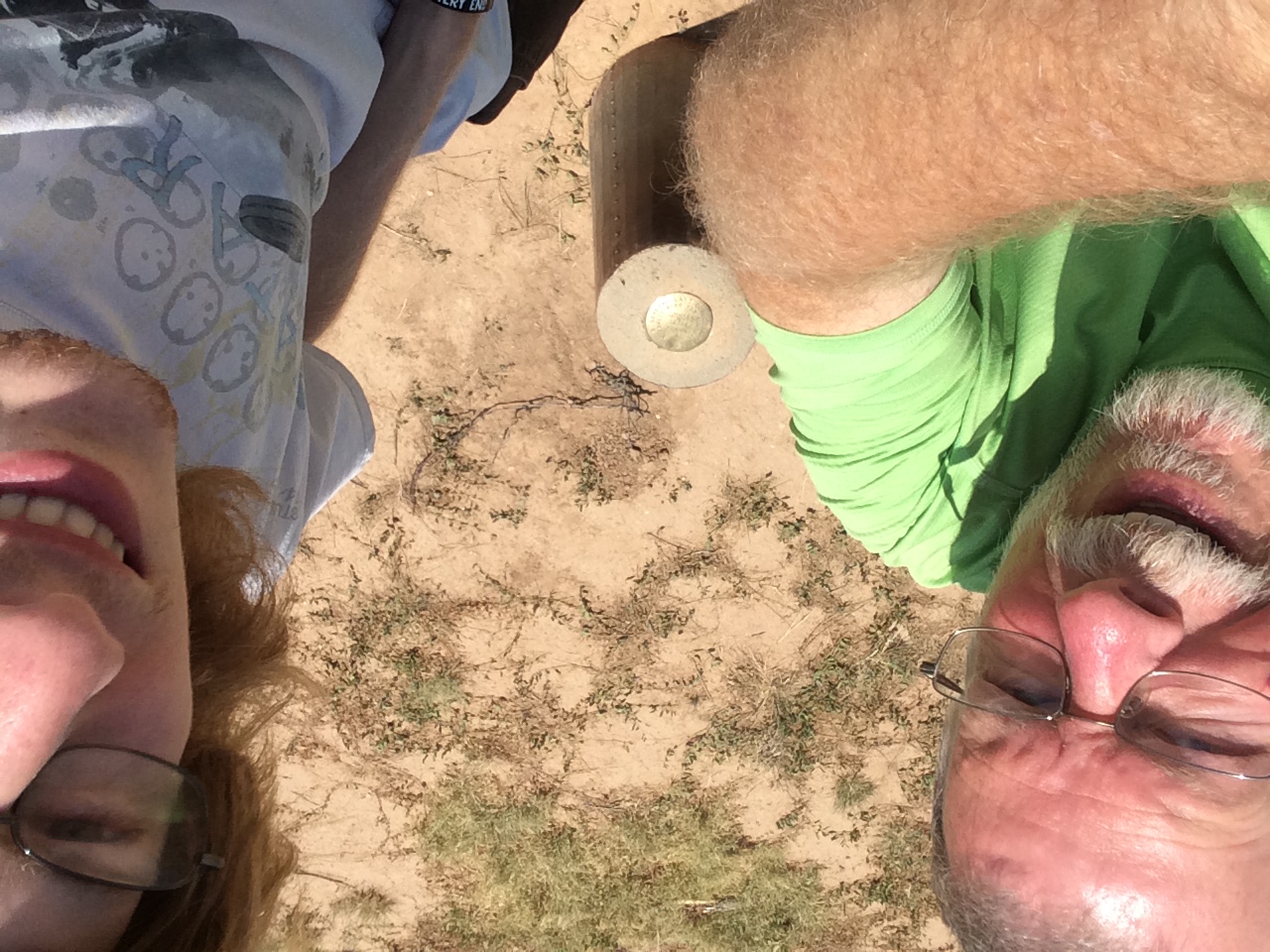
I've signed one that challenges you to find caches in 7 states in a day. It's a lot easier on the east coast than on the west coast, but this one day took us through 5, so even in the west it's possible. Start at the edge of one state, travel through 5 others and end on the edge of the next state, which is about what we did at least to get 5 different states. The photo is of the two of us getting a virtual cache at the confluence of the borders of Texas, New Mexico, and Oklahoma. Believe it or not, this was the second confluence of three states that we'd visited on this trip, having previously visited the confluence of South Dakota, Iowa, and Minnesota. Once the pandemic restrictions have totally lifted, I guess I'll need to eventually get back to the four corners area and get a photo of me there as well.
Things I learned on this day's travel.
1. Eastern Colorado is much more part of the Great Plains than it is of the Rocky Mountains.
2. Smart phones and time zones are remarkably accurate. There was one cache we found, where we were driving on the road into New Mexico. I parked the car at the side of the road, walked across the road to find a cache at the northwest corner of Texas. In the time I walked across the road, my smart phone had adjusted itself to Central Daylight Time (Texas) and once we walked back on the other side of the road, it had adjusted itself back to Mountain Daylight Time (New Mexico).
Tuesday, December 17, 2019
The Truth of Nature
Had I been working, it would have been tough to attend, because the exhibit runs from October of this year until February of next year. With that time frame, the only way I would have been able to attend would have been during Christmas vacation and there's enough other stuff going on at that time. But, because I have extra free time now, I decided to make a road trip out of it and come in the middle of October figuring that the weather would probably be the best of the time frame. Well, that's another story altogether.
As a disclaimer, I wouldn't call myself a Monet devotee. I enjoy artwork for art's sake. I just found this exhibit interesting because it would be a very large collection of paintings by a particular artist that was supposed to show a well rounded collection of his work. I would have been just as excited about attending this exhibit had it been Picasso, or Van Gogh. I was looking forward to seeing the art, not necessarily the artist.
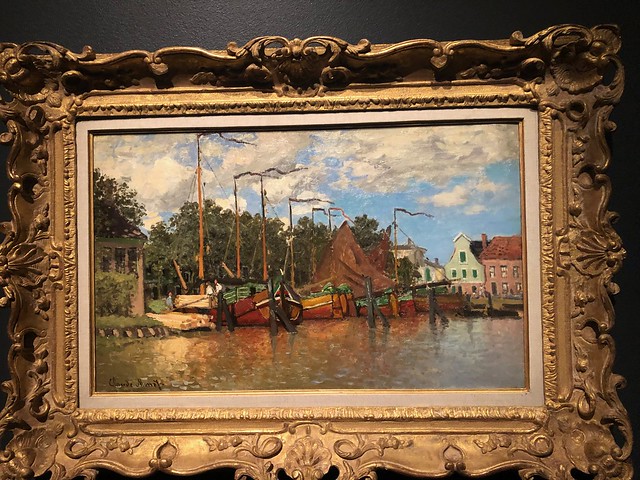
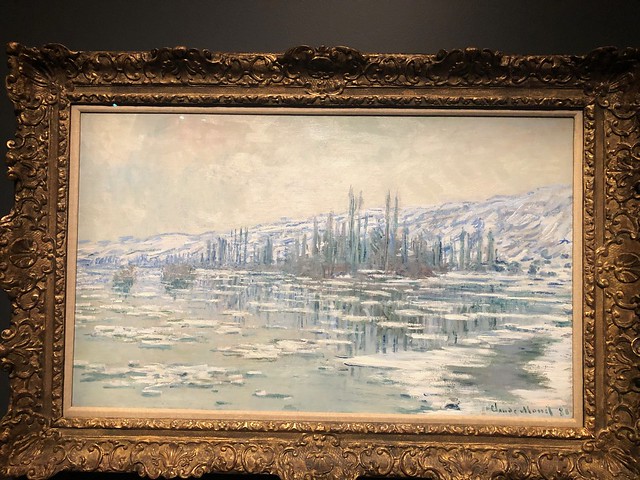
The artwork was arranged over two floors of the DAM museum annex with scheduled entries every 15 minutes. When it came close to my time, I queued up and waited for them to let us in to the exhibit. As we entered, we were given headset devices that we could listen to at our leisure that gave much more in detail information about different paintings as we walked around the two floors of the gallery. The nice thing about this was it kept people fairly quiet and it was also set up on two levels, one for adults and one for kids. I listened to one of the kids level portions and that was enough for me, but I could see where it would keep younger audience members engaged in the exhibit.Most of the artwork was arranged chronologically, so I got to see how his art progressed throughout the years. The three paintings that I have posted here I found the most interesting mainly because of the information I had been given by my headset during the time I was looking at the particular paintings.
The first painting was taken on many of his excursions down to the southern coast of France. He loved painting the people and the beach scenes. What I found the most interesting of this particular paintings, was that they were able to discern that most of his work during this particular period, was actually painted right down at the beach and not in his art studio. He did not sketch the scene, then go back and paint the scene from memory, opting rather to paint right there. They know this because of careful analysis of the painting reveals small grains of sand in the paint that had been blown about with the breeze along the beach.
The second photo shows a waterfront scene painted in Amsterdam. Analysis of this basically proves that he painted this while sitting in a boat because it's the only spot where one could get that perspective of the scene. That's some serious dedication to sit there for hours, possibly days in a boat to get the scene the way he wanted it portrayed.
Quite possibly the most interesting painting to me was the third shot here, showing the Seine River in Paris almost frozen over during the winter of 1879. Because Monet was actively painting during this entire period, he captured the weather of the era as well. This is a time of a mini ice age in Europe and meteorologists actually use his paintings to get a sense of what the weather and climate were like in this area during this period because of his attention to details.
All in all, I enjoyed my time at the DAM and was very glad that I was able to view this collection of Monet paintings. I hope you enjoyed some of these samples of his work. If you'd like to see one other painting, there's another example of his work in this blog entry about halfway down.
Tuesday, December 3, 2019
The Light Show
I'm not sure if that's totally correct. While I fully admit that I used to watch a lot of TV when I was younger, I don't as much now. However, while I'm not watching as much TV, there's a certain amount of screen time with other technologies that aren't TV that have taken up the slack and I'm sure if everyone really looked at their own life, they'd probably see similar things going one with themselves as well. Most of us use a screen in our work and in our leisure, be it a smart phone, or a computer, or a tablet. Video games, YouTube videos and the like are constantly screaming for our attention, so this particular piece did hit a note.
While wandering around this floor of the museum, I actually walked right past an Ansel Adams print they had on the wall. How I missed it the first time around is beyond me since I'm a big fan of Adams and have admired his work from an early age. I even have a poster of this exact print that my wife gave to me for Christmas one year before we were even married. Suffice to say, she knew my tastes pretty well, even back then.
The funny thing about artists is we tend to revere what we like and usually, not always, but usually assume that because they are good in one field of art, they should be good in all fields. That's not the case and it's true with Adams. At one point in my life, there was an Ansel Adams show at one of the Claremont Colleges of his portraitures, which I attended because, as I said before, I was a fan of his. This exhibit was 100 portraits by Ansel Adams.
I'm sure others went away satisfied with this particular exhibit. I did not. I have come to the conclusion that Adams was not a good portrait person. I felt that most of the portraits lacked any kind of depth and they were sorely lacking when compared with his landscapes. But, as I've said in the past, art is subjective and others, I'm sure came away with a new found respect for him.
This particular print of Adams, Moonrise, Hernandez, New Mexico is one of his most famous images. He encountered the scene while driving down a highway from another photo shoot and had only minutes to set up his equipment and take an exposure. In fact, he only took this one exposure. Later, when asked, he couldn't remember the date the photo was taken, but an astronomer in Boulder, Colorado was able to use basic knowledge of when Adams was in the area, surveying tools, astronomical information, and moon cycles to later determine that the photo was taken on October 31, 1941 at 4:03 PM. This time has since been correct to November 1, 1941 at 4:49 PM. Apparently, the error was due to a number of things, including incorrect geographic coordinates and the curvature of a computer monitor. You can read the account here in a 1991 Los Angeles Times article.
Perhaps why I didn't see this particular Adams print on my first go around was I was distracted by the hall of mirrors. Or at least that's what it looked like at first when I approached it. What looked like a fun house type of mirror exhibit turned out to be very interesting once I entered it.
First, I had to don booties to keep smudges off the mirrors. Yep, not only did this hallway have mirrors on the walls, but it also had them on the floors and ceilings, making for a very surrealistic tunnel that seemingly stretched forever in all directions. Because of the vantage point of all of the mirrors, you can actually see the booties I'm wearing in the third photo. Later in the morning, I had to walk through this again, even though it was only a 20 foot hallway. I really liked the illusion of floating on air.
I think I noted in my last blog entry that the DAM is undergoing some major renovation, so there's not as many pieces on exhibit at this time. Couple that with the two floors that were solely dedicated to the Monet paintings and there wasn't a lot to see there. However, what was available, was fascinating, in my opinion and it made me want to come back in a couple of years to take in the full museum once the renovations are totally complete.
My next blog entry will be devoted to the Monet exhibit.
Monday, November 25, 2019
Whimsical Art
Thursday, October 31, 2019
Liquid
I'm actually doing these in chronological order, which means this first shot was taken on October 20th. Yes, I did the entire theme in less than 10 days. At first, I thought that I might get by with 5 different cave photos, because after all, what creates a cave but water? And so I figured I was done, but I'll not post a bunch of photos of the caverns, because after all was said and done, I was able to come up with 5 different liquid shots. And to also be honest here, this blog entry is sort of a teaser for other entries I'll be writing about next month.
1. Phoenix, Arizona
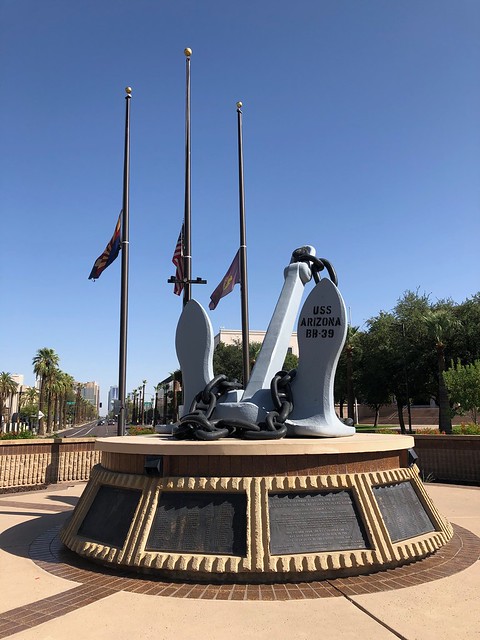
In my last post, I mentioned that I would be on an extended road trip and I just came back from that one Sunday. The main purpose of the trip was a visit to the Denver Art Museum to see a very large collection of Claude Monet paintings. The collection was only going to be there from October to February, so I figured this would be the best time to go to avoid really bad weather. Anyway, the first day of the trip took me through Phoenix. And, as usual, I spent some of the time on the drive geocaching. I ended up in downtown Phoenix, where there is a large war memorial to all of the different wars our country has been involved in. Part of this park is where I discovered the USS Arizona's anchor. Pulled from the liquid depths of Pearl Harbor in Hawaii, this anchor is on permanent display at this park in Phoenix. Around the base of the anchor are all of the names of the brave men who perished on that fateful day in 1941.
2. Guadalupe Mountains National Park
This was a new place I'd never visited before and originally, I had planned on camping here, but things fell through on the opposite end of the trip, so I ended up staying at motels along the way. This was actually a good thing because camping was very limited in this park. The Guadalupes are the extension of Carlsbad Caverns, only above ground. I spent most of the morning exploring the Caverns, and after having thoroughly explored them, I ventured south to this national park, just across the border in Texas. This park is mostly wilderness, which means little to no roads and mostly backcountry camping and hiking, something I wasn't equipped for on this trip, but I was able to get a feel for this area nonetheless.
West Texas is pretty much desert and the Guadalupe Mountains rise like an island out of this desert, providing refuge for an abundance of wildlife and plant life. I took this photo of this prickly pear cactus mainly because I liked the contrast of the brown and greens with the light violet of the flowers on the left. And if you're ever stuck out in the desert without water, you can, in a pinch, open up the cactus and get some liquid refreshment which will sustain you for a little bit.
3. Monet
The reason this trip happened in the first place was because of this collection of paintings. I can't remember where I first heard about this exhibition, but as soon as I knew about it, I started making plans to see it. The exhibition was falling at a perfect time: the fall and winter following my retirement. Since this exhibition was only happening during this time period, I probably wouldn't have been able to see it since I was working during most of that time. That's one of the benefits of retirement. I highly recommend it.
The main building of the Denver Art Museum is undergoing extensive renovation and the museum is in the annex building across the street. This means the collection of artwork on display is small at this time, but they had some interesting works dealing with the study of light.
The bottom two floors of the annex were dedicated to Claude Monet and his life. Each of the patrons were given audio guides to learn more about the paintings and about different periods of his life. The galleries were arranged in approximately a chronological order. Since he created most of his lily pad and pond paintings near the end of his life, this was the last room of the gallery that I walked through. The way the liquid paint created the illusion of the liquid water in the lily pond is just amazing, in my opinion.
4. Chocolate Porter
Coming home later in the week, I ended up in Albuquerque, New Mexico. One of the nice things about traveling is checking out the local cuisine. There were times on this trip where I'd eat at a place that I was familiar with because I just wanted a quick meal and there were times when I wanted something a little bit more tasty and different. That night in Albuquerque was one such nice, so I decided to try a local barbecue place. It was recommended to me by the waitress that I try the burnt ends sandwich, a decision which I will not regret. I also have an affinity for dark, very dark beers, the kind you can almost chew. This chocolate porter certainly filled that bill and went quite well with the barbecue sandwich I had. The Nexus Silver Taproom will be someplace I will probably visit again should my travels take me through northern New Mexico.
5. Continental Divide
Finally, on my next to last day of my trip, I traveled from Albuquerque to Flagstaff, Arizona where I would spend my last night. Heading toward Denver, I missed when I exactly crossed over the continental divide, but this spot along Interstate 40 is very hard to miss. With signs on either side of the freeway, it's pretty much a spot where travelers stop and get their photos taken.
It's also the spot, where liquid falling to earth gets separated. Rain and snow falling on the eastern side of the continental divide will eventually make it to the Gulf of Mexico. In this case, the water would flow into the Rio Grande, which forms the southern border of Texas with Mexico. Rain falling on the western side would eventually flow into the Gulf of California and into the Pacific Ocean. Most of the rain that fell here would flow eventually into the Colorado River and through the Grand Canyon.
It's always intrigued me how cartographers were able to graphically map this out and figure out where each little stream would eventually drain. If you've ever looked at a map of the continental divide, you'll see some very interesting details. In southern Wyoming, it actually splits in two, creating a basin where the water doesn't flow to either, but either evaporates or flows downhill to the lowest point in that basin where it percolates back down into the groundwater. Further north, in Yellowstone National Park, there's a lake that literally sits right on top of the continental divide. The lake has two outlets, one flowing to the Atlantic Ocean and the other flowing to the Pacific Ocean.
For hiking enthusiasts, there's also the Continental Divide Trail, a national trail which loosely follows the Continental Divide from the southern border of New Mexico all the way to the northern border of Montana. Somewhere in this area, I also crossed over that trail.
And there's my interpretation of the theme liquid. Some might call this a stretch, but it worked for me. Please check out P.J.'s blog and scroll down to the bottom. You'll see other blogs and their interpretations of the same theme. And as always, feel free to comment. I won't bite.